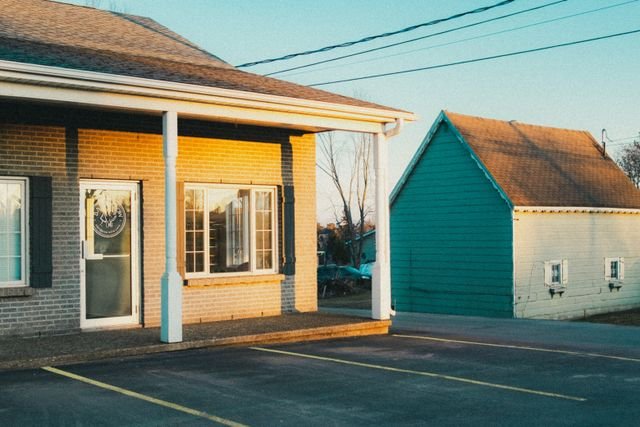
Learn the single family dwelling definition: what qualifies, who can live there, loans, and how it differs from multifamily homes.
A few years ago I stood back inside the driveway of the first house I have ever bought, which is a bit biased. Little bungalow with a yard Stamp size, and my real estate agent said something that stuck with me: “Congratulations, you’re now the proud owner of a single-family dwelling.” I remember thinking, well, obviously, it’s a house. It took me another one or two years to navigate zoning permits, mortgage papers, and everything else before I actually understood the Residential Home Definition Explained through its legal and financial meaning.
I found out “single-family dwelling” is one of those phrases everyone uses casually but almost nobody can define precisely when it actually matters, especially when you’re refinancing, adding an in-law suite, or trying to figure out whether your neighbor’s basement rental is even legal. That’s exactly why understanding the Residential Home Definition Explained is so important. So let’s clear this up once and for all.
So, What Is One Single- Family Accommodation, Exactly?
But its core, one single- family Residence( sometimes called a single- family home or single- family residence) is a standalone residential structure made for the home of one household. It sits. Its own parcel of land, Do not share walls with any other property, And that’s it its own private entrance, Its own benefit, and its own everything, Not really shared HVAC systems, No normal plumbing lines run. A neighbor’s unit, No communal anything.
Assess about it this way: If a duplex It’s like a division of a pizza with your neighbor, one single- family home, Order your own pizza, Eat in it your own kitchen, And no owing anyone a piece This independence It really is the defining feature.
Oh single- family Residence must:
- Be a freestanding structure With no shared walls
- Sit down its own individual lot
- Is a private entrance with direct access To a street
- To maintain its own separate utility systems( heating, cooling, water, electricity)
- To be occupied by a single household
That last point trips people more than anyone else, so let’s dig into it, because I promise. It’s not as tight as it sounds.
Who Can Live In A Single- Family Home?
Here’s where many misunderstandings arise. People Assume” single- family” Importance: a nuclear family, mother, father, two kids, A dog named Biscuit. This is not the case at all. Lawful, a single- family home I can stay in. Any single household, And” domestic” abounds. Broader category from” family” in the traditional sense.
That household may include:
- Nuclear or extended families, Parents, children, grandparents, aunts, uncles, whichever is the least. One roof and works as an unit
- Single individuals, A person who owns or rents the whole space, No require for family
- Roommates or friends, a group Of unrelated adults Sharing a lease or ownership, So long they work as a single housekeeping unit
- Caregivers And long- term guests, Support staff or extended visitors live with the primary resident
The key legal term here is” singular.” housekeeping unit.” Basically, If everyone is there, the home shares living expenses, meals and daily life. The way one typical household: Instead of working separately, independent tenants Everyone pays their own landlord to their own locked room. It is usually qualified. I actually lived this scenario myself in my twenties, Distribution a single- family rental with three college friends. We shared. The lease, Distributed utility, and likes work a household. He home just because of that never stopped happening. None of us were related.
He said local occupancy laws still apply. Most cities have a number of unrelated people who can legally live together. One house, In particular to prevent overcrowding and to prevent landlords from going reduced to an unlicensed boarding house. And if your property is part of a homeowners association, go HOA Can teams its own additional rules about who can rent, sublet or occupy the space. So until the definition of” household” is generous, it’s Not a free- for- all, you might require to check. Your local zoning Enter the code, speak, transform. Your basement is a rental unit to a fifth roommate.
Single- Family Attached Vs Separately: A Distinction Worth Knowing
Here’s something that surprised me when I first learned this: not every single- family home is completely separate. When most use His image, we imagine a standalone house with space on all four sides. And this is most of it. Common form, A separate one home. But party houses, e. G townhouses, May also be legally qualified. It’s under certain conditions.
According to the U. S. Census Bureau, An attachment property still counts Seam single- family If it’s separated from its neighbor Works completely through and through a solid floor- to- ceiling wall. Independent unit with its own separate ownership. So a townhouse who shares. One wall with the place next door can still happen to be a legitimate single- family residence, provided that the wall goes from floor to ceiling and each unit stands its own.
| Feature | Separately Home | Attached Home( E. G., Terraced House) |
| Shared walls | None | One Or more, from floor to ceiling |
| Privacy | As much as possible | A little less |
| The territory ownership | Full lot | Individual lot beneath unit |
| Typical cost | Advanced | Often cheaper |
I’ll be honest, when my sister purchased her townhouse, he spent weeks worrying that it wouldn’t” count”. A real house because he shared a wall with her neighbor. It certainly counts, he has quite a lot. Closer neighbor Compared to me
Single- Family Versus Multifamily: Why? The Distinction Actually Matters
This is where things get handy, especially if you’re buying, selling or investing. A single- family home House one household I one standalone structure. A big family property, Think two- sided, triplex, four- sided or apartment buildings, Contains multiple separate housing units within a single building or complex.
The difference isn’t architectural trivia. It changes your finances. The property, how you’re Taxes, how to manage it, and what kind of lifestyle you’re Sign up
| Feature | Single- Family Home | Multifamily Property |
| Structure | One standalone unit | Multiple units, A building |
| Walls | No shared walls | Often share walls/ floors/ ceilings. |
| Ownership | One owner, Full control | Can be individual, investor owned or managed by a HOA. |
| Maintenance | 100% Your responsibility | Often divided by HOA or landlord |
| Plot/ yard | Private | Often shared. |
With a single- family home, You are the owner of the structure and the land beneath this, full stop. That is to express that you also have full responsibility for every repair, every electricity bill, and every property tax bill connected to that parcel. Is not HOA Cut quietly the common lawn For you( unless you’re I a planned community) And no property manager When to call the water heater But dies 2 a. M. It’s all you.
Multifamily ownership It’s muddy. An investor could be the owner of the whole building and rent every unit, or individual units can be owned separately within. A structure Administered by a HOA, Where residents pay. Monthly dues This fund was divided. Maintenance. Less personal responsibility, Definite, but also less autonomy over What can you change?
What About Townhouses And Condos, Are They Detached Houses?
This question is still coming, and the honest answer is: It depends.
Townhouses generally qualify as single- family homes. Though they share a wall( Or two) with neighboring units, each townhouse usually sits its own individual lot, is a private entrance, and comes along direct land ownership. Importantly the owner pays their own property Tax in the same way as an independent home owner would. The trade is closed. There are many parts of a HOA, which comes with its monthly fees in exchange for reduced exterior maintenance duties.
Condominiums, but on the other hand, are a different animal absolutely when you buy. A condo, You are the owner of the interior airspace of Your device, however not the land underneath This, and not the building’s exterior. Corridors, lifts, terraces, pools, gyms, all are collectively owned by each resident. The complex Organized by and a HOA. Because of that shared land and structure ownership, Condos are not classified as such. You’re paying HOA fees not just for convenience, but because you really are a co- owner. The building along with everyone else who lives in it. So, quick gut check: If you own the land under Your device and it’s separated from your neighbor by a full wall, You are most likely looking for a single- family home. If you are the sole owner. The air inside your walls, you’re I condo territory.
Why This Definition Actually Means( Beyond Trivia Night)
I used to contemplate. ” it” It was just real estate jargon. It made no impact on my daily life. Then I tried to add a small rental unit above my garage and learned very quickly how wrong I was. Here’s where the definition is real teeth: Zone approval. For the most part residential neighborhoods are especially zoned for single- family Use, which means you usually can’t legally change your home into a duplex or divide therein. Separate permanent rental units without special permits or a zoning variance.
Mortgage financing. Lenders process. Single- family And multi- family properties are very different. Single- family homes often qualify for down payments( sometimes as little as 3– 5% with certain loan programs) and usually transport lower interest prices compared to 2– 4 Unit multi- family properties, which may require 15– 25% under Insurance. Homeowners insurance policies are usually written specifically around. Single- family dwelling classifications, and misclassification of your property can produce coverage gaps. Fee. Because you own both. The structure and the land of course, property tax calculations And potential deductions Unlike an apartment or multi- family house ownership structures
HOA restrictions. Even single- family homes I planned communities can congregate HOA rules How limited many unrelated occupants can live there or rent. The property is straight out.
Common Financing Paths To Single- Family Homes
If you’re buying, it helps to know. Your loan options go to:
- Conventional loans, Not system supported, usually required. A credit score about 620+, often the best rates For well- qualified buyers
- FHA loans, Supported by the Federal Housing Administration, Allow as little payment as possible. 3.5%, More forgiving credit score
- VA loans, Available for eligible veterans and service members, Often no advance payment is required
- USDA loans, For buyers eligible rural areas, Also often necessary zero under
Just remember, if your down payment is in progress. A conventional loan Diving down 20%, You will probably be stuck paying private mortgage insurance( PMI) Unless you build enough equity, Something I learned the expensive way But my first mortgage.
FAQs
Is a townhouse understood to be a single- family home?
Yes, in most cases. Also included shared walls, townhouses Sit normally individual lots with separate ownership And private entrances, It keeps them in. The single- family category instead of the condo or multi- family category.
Who can live legally? A single- family home?
Any group Works as a single household, family, single individuals, Roommates, or extended relatives, can occupy a single- family home, So long they work as one House keeping unit and comply with it. Local occupancy limits.
What is the difference Between connected and detached single- family homes?
Detached houses stand completely alone without numbering shared walls, They offer maximum privacy. Attached single- family homes, appreciate townhouses, Share it one Or more walls But still intact separate ownership, Private entrances, and individual land parcels.
Is a single- family home a good investment?
In general, yes. Single- family homes Historically shown. Strong appreciation and offers flexible use, long- term rental, Short- term rental, or personal residence. Here is the transaction. A vacancy Importance a full loss of rental income Until you figure it out a new tenant, Unlike multi- family properties where other units can shift one vacancy.
Key Taking
Looking back. That day in my driveway, I wish someone had given me a hand now, a straightforward rundown. Instead of tearing me apart, favor this together through trial, error and one very awkward permit office visit. Oh single- family Residence, at the end of the day, comes freedom, your own land, your own walls, your own household to construct its own rules under one roof.
About that household is a family Of five, A person, or four roommates Shared rent, unless you Live as one unit But your own standalone( or ground to roof separation) property, You have found yourself a genuine single- family home.
Additional Resources:
- U.S. Census Bureau – Housing Unit & Residence Definitions Defines what qualifies as a housing unit or residence under federal statistical standards, including separate living quarters and occupancy criteria.
- U.S. Census Bureau – General Housing Characteristics Explains federal classifications for residential structures, including single-family detached homes, attached homes, townhouses, duplexes, apartments, and other housing types.
- Consumer Financial Protection Bureau – FHA Loans Guide Provides official guidance on FHA mortgages, including eligibility, down payment requirements, credit score expectations, and how FHA loans compare with conventional financing.
- Consumer Financial Protection Bureau – Mortgage Resources The CFPB’s official mortgage hub with authoritative information on buying a home, comparing mortgages, and understanding government-backed loan options such as FHA, VA, and USDA loans.