
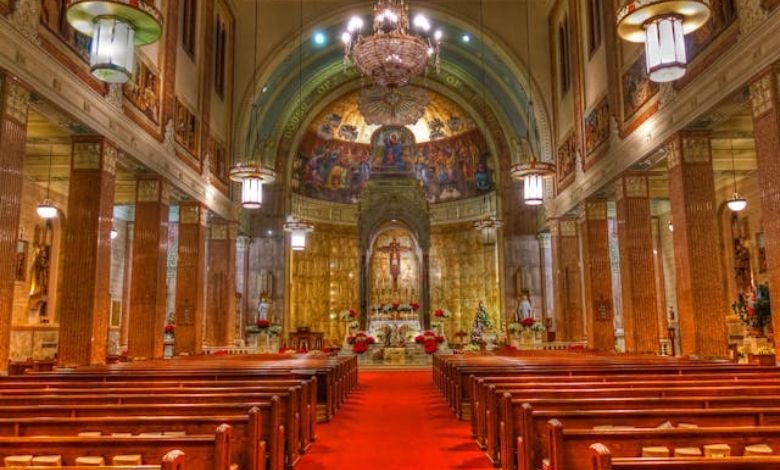
Differences Between Catholic and Christian – explained key differences in belief, authority, and church structure in simple terms .
I still remember. The first time I applied. The differences between catholic and christian. It felt that way. One of these simple, almost textbook books questions, something you expect a quick, clean answer But the deeper I went, the more I realized that it’s not just about religion. It’ s about structure, authority and even law, Behavioral Law. As it begins. A basic comparison opens the door to a much more complex reality.
A Simple Answer First
But its core, The difference is: the Catholic Church is a specific branch within the broader umbrella of Christianity. Put differently, every Catholic is a Christian, but not every Christian belongs to the Catholic Church.
It seems fine. And for many readers, that’s enough. But if you stop there, you’re missing out. The deeper story, go one. This actually explains why this distinction means something in real life.
Quick Comparison to Clarity
Before diving in, it helps to visualize. The contrast Absolutely:
- Catholic: A specific denomination with centralized authority
- Christian( General): A broad category included many denominations
- Management: Catholics Monitor the Pope; Other Christians Follow Suit. Varied leadership structures
- Legal Structure: Catholics work. Under a formal system; For the most part other groups don’t do
- Unit: Catholicism is globally united; Christianity It is diverse and decentralized
This quick breakdown That’s usually what people expect when they search. The differences between catholic and christian. But it’s only the beginning.
What Most People Think
There is a difference. Basically I assumed the distinction was purely religious, beliefs about saints, rituals or leadership. And yes, those differences current Catholics Emphasis on tradition, customs, and the authority of the Pope, While many other Christian groups Prioritize personal interpretation of scripture And simpler forms of worship.
But this is where things get interesting. The more I read the more I realized that faith is righteous. One The team is below that. Something far more organized, and surprisingly legal.
The Hidden Legal Layer
But at some point, I stumbled. The concept of Canon law, And that’s when everything changed. The Catholic Church just doesn’t work as well as a religious body; working on its own internal legal system. This means that laws, courts, procedures and even judges are involved. The institution itself.
Most Christian denominations There is nothing like that. These Guidelines can be or leadership structures, But they Do not operate under an uniform, codified framework. Legal framework. It creates. A fundamental difference He goes far beyond Sunday services or prayer styles.
A System Within A system
One Most of all fascinating discoveries But my journey I felt myself that Catholics Most are inside two parallel systems:
- Civil law( Landslaw they survive in)
- Church law( Internal rules for canon law)
This dual structure can create situations where something is legally correct. One system but not inside the other.
Take marriage for illustration. A couple may be legally married under state law but not recognized as such valid under Catholic law, or vice versa.
It isn’t. Something most people expect when they observe first the differences between catholic and christian, But it’ s Incredibly crucial.
Real- Life Implications
It’s not just theoretical, it’s lived. Marriage and Family
Catholic marriages follow strict canonical rules. If those rules do not come together, the marriage can be misunderstood within. The Church, although it’ s totally legal civil terms. This is where annulments materialize, which are very different from divorce.
Authority and Decision- Making
In Catholicism, authority flows from a central figure, the Pope, down through a systematic hierarchy. On the contrary, many other Christian groups operate independently, which means that decisions are often made locally.
Property and Organization
Catholic institutions are part of a global system, while other churches often work as independent organizations under local laws. This affects how property is owned, managed and even contested.
Rights and Identity
In some legal contexts, religious identity Matters Questions Discrimination or recognition may depend on how a group is defined, which is often associated with principles. Freedom of religion.
Why This Difference Actually means
But one point, I asked myself: Does any of this really matter? the average person? The answer is yes, more than you might think.
Imagine preparing to marry someone. A partner from a different denomination. Or any related to workplace issues. Religious identity. Or even someone searching for faith and trying to understand where. These situations are not rare. And in each case, differences between catholic and christian suddenly become very real, very practical and sometimes even legally relevant.
A Historical Turning Point
To fully understand why these differences, that is, you have to look back. The Protestant Reformation. This term took on a new form. Christianity, to separate from a single centralized system I have many independent groups.
Before that, the Catholic Church There was much of an unified religious and legal authority. Europe. Later, that unity Scattered, feeds. The diverse Christian landscape we witness today.
That historical shift is the reason why Catholicism remains highly structured. Other Christian traditions are so varied.
To clean up Common Misunderstandings
One thing I continued to obtain notes during this time. My research was how often people attain it wrong. This topic.
- Catholics is Christians. There is no separation.
- Christianity is not a single organization. This is it. A broad category.
- The difference It’s not about” proper or”. Wrong” beliefs, That’s about its structure and authority.
To understand this clears up. It creates a lot of confusion and the entire discussion is too much.
Bringing it all together
Looking back, what started? a simple search Changed to a much deeper exploration. Go differences between catholic and christian Not just about theology. They reflect two very different ways of organizing belief, Authority, and even the law.
Catholicism represents a centralized, organized system with its own legal framework. Christianity as a whole represents a diverse collection of beliefs And exercises without a single governing authority.
And that distinction, but fine at first glance, has real implications in areas such as marriage, governance and identity.
The Key Takings:
- If present. One thing I have learned is this: simple questions There are often layered responses.
- What starts as curiosity can quickly turn into insight, especially when you are willing to examine. Beyond the surface.
- So the next time someone asks about the differences between catholic and christian, You pursue to know it’ s Not just about religion It’ s About how belief systems Are created, how is authority defined, and how? Those structures shape real lives in ways we don’t always notice. First,
Additional Resources:
- https://www.britannica.com/topic/Roman-Catholicism: Clear explanation of Catholic beliefs, structure, sacraments, and how authority is organized through the Pope, bishops, and church tradition.
- https://www.britannica.com/topic/Christianity: Broad overview of Christianity as a whole, including its major branches such as Catholicism, Protestantism, and Eastern Orthodoxy.