
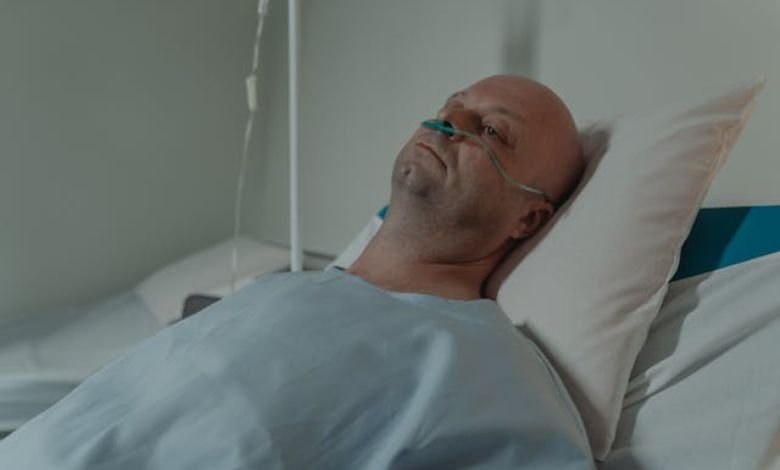
What Caused Sean’s Brain Injury explained: explore accident causes, legal factors, and liability in complex injury cases.
I still remember. The first time I came forward with a question “Value” under Behavioral Law: What is the reason? Sean’s brain injury?”. But first, It felt okay, almost esteem something you could answer in a single sentence. The accident caused an injury. After that, the case was closed.
But the deeper I looked, the more I realized that. This kind of question is not quite so simple. Actually, it fits perfectly the intersection of facts, Law and human interpretation.
So let’s begin. The obvious.
The Immediate Cause: what happened
In most situations, caused by brain damage. A clear event.
- A fall
- a car accident
- A blow to the heart the head
- Something physical and recognizable
If Sean But slipped a wet floor And eliminated his head, He becomes a fall the immediate cause. This is it. The kind of explanation people when you can expect them to Solicit“ What Caused Sean’s Brain Injury?
But here’ s That’s where things start to change.
Because of legal terms, Identify the cause. It’s not just about what happened. It’ s about the important thing.
Why“ Cause” Is More Complicated Than This Seems
The law doesn’t discontinue the surface. It digs deeper and asks more. Precise question: What cause actually creates liability?
And this is where things get interesting. In real- life scenarios, it is rare. It usually happens. A chain of events, Everyone plays a role.
Analyze it as dominoes. One falls, then another, then another. But when something goes inappropriate, the law blames every domino. Nevertheless, it chooses. One, Or wale, it should be taken. Legal responsibility.
That is the core idea behind causation in law. It’s not about identity. Every possible factor. It’s about reducing it. The ones It counts
The Two Test Courts Use To Decide Cause
It is up to the courts to determine this. Two main tests.
1. The“ But- For” Test
This is the starting point. The question is simple: Will the injury have happened but for a specific action?
If the answer is No, then that action is understood as a factual cause. For example if Sean It will not be tolerated the injury But to escape that wet floor, Then the floor condition becomes part of the causal chain.
2. Reason for intimacy
But this is not enough. The law goes one step. Ask further: Is the injury an expected result of that action?
This is the location. Many potential causes get filtered. Although something helped. The injury, It cannot be considered legally relevant if it’ s Too remote or unexpected.
I remember struggling with this concept but first. It felt unfair, almost arbitrary. But over time, I understood. It’ s actually a way to keep liability reasonable. Without it, blame can spiral around endlessly.
When it’s not enough One Cause
Here’ s What most people don’t understand is: brain injuries Often include multiple contributing factors.
- Can be the floor was wet
- Maybe it wasn’t Warning sign
- Can be the lighting was detrimental
- can be Sean our a pre- existing condition It did the injury worse
In these situations, Courts can use what is called the“ substantial factor” approach. Instead of looking for one single cause, they ask what? a particular action played a significant role in the outcome.
It means more. One party I can be responsible for. At the same time. And this is a big deal.
Because now the question” What reason?” Sean’ s brain injury?” drops approx a single answer And more about a combination of factors working together.
What can break the chain of responsibility?
Just when you consider you have it figured out, a novel layer appears.
Sometimes something happens later than the initial event. It changes everything. These are called intervening causes.
Imagine, for a sample. Sean I’m injured in an accident but then receive improper medical treatment It gets worse. The medical error can potentially change or even break. The chain of responsibility.
But not all. Intervening events is this effect. The only ones who are truly unexpected do the law Says” violating causes” can decrease liability.
This is one Most of all misunderstood aspects of causation. And honestly, it took me a while to fully understand it. It’ s not just about what happened next. It’ s about whether that next event was worth considering.
Why Brain Injuries are particularly complex
Brain injuries Add a contemporary difficulty level.
In contrast to a broken bone, which is clear and immediate, brain injuries can develop over time.
- Symptoms may appear within a day or so
- Weeks later
- Medical evidence can be comprehensive
- And pre- existing conditions May fade the lines Even longer
It is also a legal principle Often used in these cases: you extract the victim As you determine them. In simple terms, Although Sean was weaker than the average person, Responsible for the injury can still be held solely responsible.
This answers the question“ What Caused Sean’s Brain Injury?” More importantly, because the law alone does not reduce responsibility the outcome was more serious than expected.
The Real Question Behind search
But at this point, it will be clear that people who track this question rarely see a factual explanation.
They’ re Really request:
- Who is responsible?
- Can this have Stopped?
That’s a legal claim. Here I’ ve seen this pattern again and again. What begins as a curiosity often turns into a curiosity. Something deeper. Need clarification. Sometimes too a need For justice
How Lawyers Actually the approach This Question
Practically, lawyers don’t just make a list of possible causes. They erect. A narrative.
They connect to events in a logical sequence. They are finished. Weaker explanations. They focus on the strongest, the most defensible link between action and injury.
It’ s Value telling a story, But one that has to Stand up in court.
- Every detail matters
- Any difference can be challenged
- And the goal is always the same: to create a clear, continuous chain which leads directly to that. The injury
When Cause Turns Into A legal claim
Not every cause leads to a lawsuit. To a legal claim to be present, several elements Must be together:
- A duty of care
- A breach of that duty
- A direct connection To the injury
- Measurable damages
When everyone these align, Causality becomes more than just an explanation. Becomes the foundation of a case.
And this is when a simple question Value“ What Caused Sean’s Brain Injury? Can develop into something much more serious.
The Key Takings:
- As it began a simple question It turned out to be anything but.
- The cause of a brain injury It’s not just about the identity of an event.
- It’s about understanding a chain of actions, Assess responsibility, and determine what can actually be proven.
- And if present. One thing I have learned by exploring this topic, it’ s This:
- The law just doesn’t inquire what happened. It asks what the difference is.
- That distinction changes everything.
Additional Resources:
- https://www.cdc.gov/traumatic-brain-injury/about/moderate-severe-tbi.html: Breaks down how TBIs occur from external force like vehicle crashes and explains severity levels of brain damage.
- https://www.findlaw.com/injury/car-accidents/brain-injury.html: Explains how brain injury cases are analyzed legally, including negligence, fault, and compensation rules.