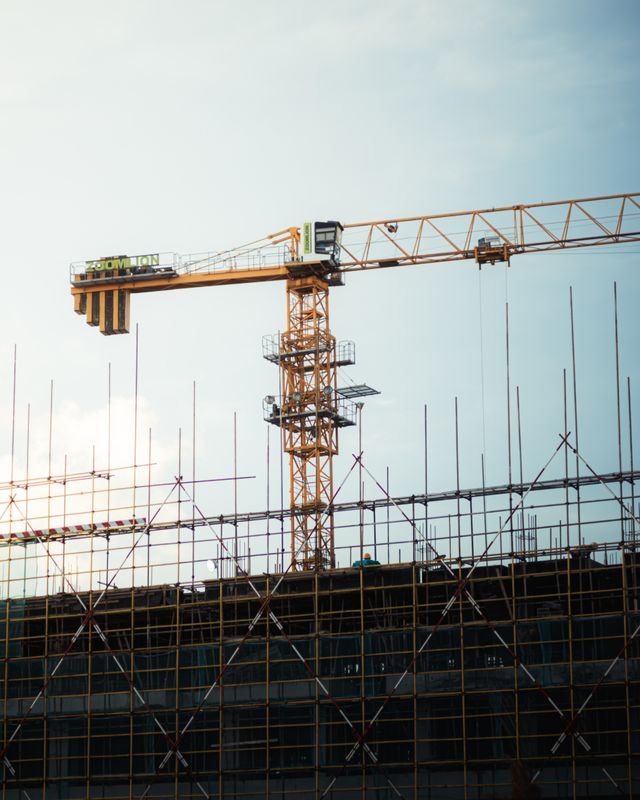
The course of construction insurance covers your home while it’s being built. See what it covers, costs, and how it beats guesswork.
Construction insurance is for your home while it is being built. Discover what it covers, what’s excluded and the cost of course of construction insurance versus builder’s risk coverage, plus legal updates.
Quick Answer
Construction of course (COC) insurance relates to a property policy that insures a building under construction or during significant renovation. It offers protection against physical damage to the structure and materials, including damage resulting from fire, wind, hail, theft, or vandalism. Legal updates in your state can change what a policy must include, so check the latest rules before you sign.
Let’s start with a confession. When my wife and I laid the foundation for our first custom-built home, I assumed I had it all figured out when it came to insurance coverage. We had a homeowners policy on the rental our contractor was going to fix up, so how much different could a new one be?
Our lender sent a checklist and, between asking for the final appraisal and signing the builder contract, there was one line that read Evidence of this required.
My eyes had read the words five times over the course of that day, but I still didn’t have an answer to the question, What is a course of what? Did this mean the same thing as builder’s risk insurance? Did my builder already carry it? That I would have to buy it myself? Nobody had seen fit to tell me.
If you’re asking yourself similar questions as you begin the daunting task of building or substantially renovating your home, chances are you’ve already stumbled onto this page. I’m going to take you step-by-step through what I wish somebody would’ve explained to me: course of construction insurance, what it is and isn’t, how much it costs, what the fine print really means, and which legal updates could affect your coverage.
What Is the Course of Construction Insurance?
Construction insurance covers a building that is under construction. It covers the structure and materials from the beginning of the project through completion.
Think of this as a safety net stretched underneath your renovation or build. At the point your home reaches its peak value (finished and move-in ready), it faces its highest risk of suffering damage. Open walls, stacks of wood, the lack of doors, alarms or even people sleeping in the space at night can increase the odds of something happening to your project. That’s Where this Comes In
Why Your Regular Homeowners Policy Won’t Cut It
In this case, a standard homeowners policy doesn’t cover a building during its construction. That’s why most insurance companies won’t extend coverage to an unfinished home under a homeowners policy.
Imagine lightning strikes the side of your house in months three. Without coverage, you’ll be expected to pay for the repairs out-of-pocket, even though you’re still making payments on your construction loan.
That’s why lenders ask for construction insurance. They have their money tied up in the house until closing and want to ensure they don’t lose everything if something happens to the project.
Construction Insurance mortgage holder insurance shows how it differs from builder’s risk?
I’m guessing this is the question you’re really asking. You’re not alone. Search engines are full of people asking if there’s a difference between the two, and you’ll get completely different answers depending on who you ask. Here’s the short answer: people often use them interchangeably, even though there is a nuanced difference rooted in how the policies are bought
Here’s the long answer: Both builder’s risk and this protect the structure of a building and its materials during a project, but agents and underwriters will often use one term for the policy itself and the other for the coverage. If your lender is asking for this and the policy your agent is presenting is called builder’s risk, rest assured, you’re likely buying the same coverage.
While the terms are often used interchangeably, in practice they can refer to two different ways of purchasing the same coverage
| Course of Construction | Builder’s Risk | Standard Homeowners | |
| Typical use | Owner-built or lender-requirer homes; often an endorsement or add-on | Standalone project policy, commercial or residential | Finished, occupied homes |
| Covers the structure under construction? | Yes | Yes | Generally no |
| Covers materials on site or in transit? | Usually | Usually | Rarely |
| Who usually buys it? | Owner, sometimes the builder | Contractor or owner | Homeowner |
| Ends when… | Construction finishes and coverage converts | Project is completed | You cancel or move |
The takeaway: don’t read too much into the name. Two policies with the same name can offer very different things, so always read the fine print and confirm with your agent.
What Does this Cover?
After I met with my agent and read through the policy, it became clear to me why my homeowners agent hadn’t recommended this as an add-on. The coverage was far more comprehensive than I expected and, frankly, should’ve been included in my previous policy.
A course of construction policy typically covers:
- The structure itself. It pays for a partial or total loss of the building from the foundation through finishes.
- Building materials and supplies. It covers the framing, fixtures and anything else that’s on-site or in-transit.
- Temporary structures. Scaffolding, fencing and jobsite offices are included.
- Common perils. Fire, lightning, windstorm, hail, theft and vandalism are often included.
Some policies even offer optional coverages like:
- Debris removal. These items are covered by the policy after a covered loss: removal of damaged material and debris from the jobsite.
- Soft costs. Some policies include reimbursement for the indirect costs of a covered loss, like additional interest on your construction loan or rent while you wait for repairs.
If you’re building in a flood zone or earthquake zone, your policy may specifically exclude those perils unless you add them. Ask about them upfront, since you don’t want to learn about their absence after claiming for a loss.
What this Usually Doesn’t Cover
COC is property insurance, which typically doesn’t cover third-party liability, which means if a neighbor gets hurt on your jobsite, you’ll need to purchase a general liability policy separately. Many competing guides will tell you COC does include liability coverage, but in practice, most policies are completely separate. Always double-check with your agent to make sure.
- Injuries to workers. These should be covered by separate workers’ compensation coverage.
- Contractors’ tools and equipment. Those usually require equipment coverage.
- Faulty workmanship, wear and tear and other standard exclusions.
I like to think of it this way: COC covers the house itself. Other policies are needed to cover the people and the tools. Make sure you’ve got coverage for all three.
Who Needs A Course of Construction Insurance?
Everyone involved in the project stands to benefit. Here’s why:
- Homeowners. Homeowners can protect their investment before they ever walk into their new home.
- General contractors. General contractors can avoid the financial liability of a damaged jobsite.
- Lenders. Lenders almost always require this before releasing project funds.
- Subcontractors. Subcontractors benefit when their work in progress is protected, even if they purchase their own coverage for the tools on-site.
Who Pays for It?
It depends on the contract, but most often it’s assumed the owner will carry the coverage. When my wife and I were building our first home, our builder assumed we would carry the policy, but it wasn’t until our lender asked us to present proof of insurance that we realized that assumption wasn’t, in fact, a fact. Ask your builder early so that both of you know who is supposed to carry the coverage, and don’t assume just because your builder carries a policy that they’re assuming responsibility. It’s easy to find yourself exposed in the cross-fire.
How Much Does this Cost?
I’m going to be careful here because the truth is that rates can vary drastically from carrier to carrier, and anyone who tells you a certain amount is a lie. For reference, the coverage is usually a small percentage of the total value of the construction and varies project-to-project, but here are the factors that determine how much you’ll pay.
- Total construction cost. The larger the build, the higher the premium.
- Location. Coverage in wildfire, hurricane, hail and crime zones will increase the cost.
- Construction type and materials. Wood framing costs more than masonry, for example.
- Project length. Projects that take longer to finish tend to have a higher premium.
- Deductible and coverage limits. Higher deductibles usually decrease the amount you pay.
- Add-ons. Coverage for additional perils like floods and soft costs can increase the premium.
Pro tip: Ask for at least two or three quotes.It’s an hour to do and it could save you a couple of grand.
Example
Say you’re building a $500,000 home. A fire breaks out after the crew has framed and roofed it but before they hang the drywall in your new living room.
Without coverage, you’re expected to pay to rebuild the home, and the lender still wants their monthly payments.
With a solid course of construction policy in place, the insurer is expected to pay for the repairs and replacement of any materials damaged in the fire, up to your limits and minus your deductible. While your project is delayed, the fire doesn’t derail it.
How to Get Course of Construction Insurance
Getting the coverage turned out to be easier than I feared. Here’s how to do it, step-by-step.
- Ask your lender what they require. You’ll need to know what the minimum coverage amount is and what verbiage they want to see in the policy.
- Talk to your builder. Ask them who is required to buy the policy and if they already carry one.
- Call a licensed insurance agent. Independent agents can help you find the coverage with the best terms.
- Share your project details. Expect to share the address, type of construction, budget and timeline.
- Time it right. Make sure you have coverage in place before you break ground or bring in materials.
- Plan the handoff. Ask how the coverage will transition into a regular homeowners policy when construction is complete so that you aren’t in a coverage gap.
FAQs
Course of Construction (COC) Insurance versus Builder’s Risk.
Often, yes, but the difference usually lies in how the policy is written. They both cover a building under construction, but builders’ risk is often a standalone policy separate from the owner’s homeowners policy.
Is this Required?
If you have a construction loan, yes. Even if you don’t, it’s still a good idea to get coverage.
When Does this End?
It ends when the construction is complete and you occupy the structure, or when the permanent coverage kicks in, whichever comes first, but double-check with your insurer.
Does It Cover a Renovation?
It can, especially if you’re making a substantial renovation, but ask your agent whether your project qualifies.
Final Thoughts
- That line on my lender’s checklist taught me more than I ever thought I’d know about homebuilding.
- This is just one element of the complex puzzle that is home renovation or construction, but it’s an absolutely necessary piece if you don’t want an unforeseen disaster to derail your move-in ready dream home.
- With that in mind, I encourage you to ask questions, compare your options and read the fine print. Your future self standing in the middle of the dining room of their finished home will thank you.
Additional Resources:
- Insurance Information Institute (iii.org): Consumer-oriented articles and guides covering homeowners and property insurance basics.
- National Association of Insurance Commissioners (content.naic.org): Consumer guidance and a state lookup tool to find your insurance commissioner.
- Your state Department of Insurance: State-specific consumer guidance, licensed agent lookups and complaint tools.