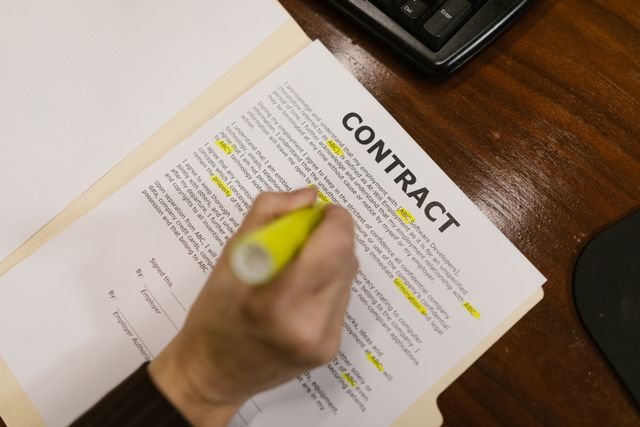
A change in control clause defines your rights when a company’s ownership shifts. Learn how it works and why it matters here.
Change in control clause is the type of tripwire. It does not trigger before something happens, but rather, after it has already occurred. If you are looking for the change of control legal definition, the following is a plain English approximation: a situation where a company’s ownership or governance shifts in such a way that a new set of shareholders, directors, or executives emerge as the decision-makers for the enterprise. This is exactly the kind of shift that corporate Legal Updates are meant to flag early, since it can change a contract’s terms overnight.
Imagine you had a landlord who was very laid back regarding the timing of your rent payments, a little nonchalant about a small nail hole in the wall of the apartment you were renting, who you trusted wholeheartedly. Imagine further that she sold the building to an investment firm that you’ve never met. Same lease, same apartment, very different relationship. A change in control clause asks precisely the type of question that a skittish tenant might: to what extent do I have a say in the matter? May I walk away if the new owner proves to be unreasonable? A change in control clause asks the same basic question, but for a business and its suppliers, contractors, employees, and financiers. Staying current with relevant Legal Updates is often the only way to catch these shifts before they quietly reshape your existing agreements.
What Constitutes A Change In Control?
This is a crucial question, to which many people, myself included at the time, often give an incorrect answer. A change in control doesn’t happen simply because the CEO quits or a new VP is hired. There are particular business events that most change in control clauses are written to trigger based on, such as:
- a majority stock transfer (when a third party acquires over fifty percent of a company’s voting stock and assumes control of the enterprise),
- mergers and consolidations (when a company merges with or is acquired by another),
- sales or transfers of assets (essentially, when a company ceases to operate in the manner that it did previously),
- or shifts in board composition (newly installed directors hold a voting majority).
There was a founder (we’ll call him Marco) who once erroneously assumed that a change in control could only occur when there was a total buy-out of his shares in the company. When his board of directors added three new members to the core group of five following a funding round, tipping the voting balance entirely, his employment contract’s change in control clause activated instantly, as he had not sold a single share.
Why Is There A Change In Control Clause In A Contract?
This was a question that I asked my lawyer friend that afternoon. His response was that they were generally included to protect the interests of the parties involved. Nobody wants to sign a deal with Company A, work closely with Company A, negotiate mutually beneficial terms with Company A, only to discover that Company A has been bought out whole by their biggest competitor
The clause serves four purposes:
- it protects the parties involved from unwelcome risk,
- it prevents unnecessary disruption by preserving stable relationships,
- it provides leverage for negotiations,
- and it demands that companies that acquire others honor or compensate the other party for their existing commitments.
What Happens When A Change In Control Clause Is Triggered?
It depends on the language of the specific contract involved. I’ve seen four basic types of outcomes, shown below.
| Outcome Of Change In Control Clause | What It Means | Where It Is Typically Seen |
| Either party can walk away from the deal entirely | Termination | Vendor/supplier agreements |
| Both parties renegotiate the terms of the contract | Renegotiation | Long-term commercial contracts |
| The contract is continued as written | Continuation | Long-term supply agreements |
| The consent of the parties is required to modify the agreement | Consent required | Licensing and partnership agreements |
For an employment contract, this typically manifests as an immediate acceleration of benefits (such as restricted stock options vesting immediately), or severance pay in the case that a takeover renders the employee’s position defunct or significantly altered. If you’ve ever heard the phrase “golden parachute,” this is typically what it refers to.
For a loan agreement, this usually takes the form of a demand for immediate payoff – the lending institution can request the outstanding principal and interest to be paid back immediately upon a change of control rather than at the end of the loan term.
Single Trigger Vs. Double Trigger
You are likely to come across these terms more frequently, particularly in the context of executive employment contracts and equity options plans.
Single trigger: refers to the point at which a “change of control” event occurs. In the context of equity options, it refers to the fact that the options are vested the moment there is a change of control, regardless of what happens to your employment situation at the time.
Double trigger: refers to the situation where both a change of control occurs, plus something further happens to your employment (such as being laid off or having your role substantially diminished).
The trend in more sophisticated contracts is to apply double trigger: that is, that you should not receive a windfall simply because a company has been bought, but rather, you only receive it if you yourself have been laid off.
An Example Of The Change In Control Clause In A Contract
Here is a typical instance of the language that a change of control clause would take in a contract:
“In the event that a Change of Control occurs with respect to [Company], the other Party shall have the right, upon written notice, to terminate this Agreement or to request renegotiation of its terms. For purposes of this Agreement, ‘Change of Control’ means the direct or indirect acquisition of more than fifty percent (50%) of the voting rights, ownership, or decision-making authority of [Company] by any third party.”
See how specific they get about more than fifty percent? That’s not an accident, as vague language about a change of control can lead to disputes.
Lessons Learned
A change of control clause rarely is the most interesting thing about a contract, but it’s usually the most important thing that gets overlooked that can have major consequences. Once I started learning to read change of control clauses more closely, I realized how easy it was to miss out on important details, such as:
- consent requirements,
- unilateral termination rights,
- or thresholds for what constituted a change of control that didn’t account for my own risk tolerance.
A few of the most important lessons I’ve learned about reading change in control clauses are as follows:
- ask yourself the question of who could potentially take a controlling interest in the other party,
- look out for threshold language,
- and make sure that you really will benefit from the remedies that are laid out in the contract.
Never assume that a generic, boilerplate change in control clause is going to protect you evenly as the other party. Get it reviewed professionally if it’s important, as a poorly worded contract can cause all sorts of headaches down the road. I know of a situation where a lawyer friend of one of my colleagues caught a poorly worded clause that had the potential to bind his company to a five-year agreement with a company that they didn’t want to work with.
FAQs
What is a change in control clause?
It is a clause that gives either or both of the parties to a contract certain remedies or rights in the case that there is a change in control of either party.
What triggers a change in control?
A change in control can be triggered by a variety of different events, such as a majority stock transfer, merger or consolidation, asset sale, or shifts in board composition, among others.
What is the difference between single trigger and double trigger?
Single trigger refers to a change of control occurring, while double trigger refers to a situation where there is a change of control and another event also occurs (such as your job being eliminated).
Does a change in control clause apply to employment contracts?
Yes. It can take a number of forms, such as accelerated vesting of stock options, severance compensation, or notice periods.
Can a change in control clause derail an acquisition?
Yes. If key contracts of the acquired company have exit clauses that require renegotiation of terms or provide the other party with the right to exit the deal entirely if there is a change in control, due diligence can be complicated and expensive, or the other party may pull out of the deal entirely.
KEY TAKING:
- The change in control clause does not only appear in the contracts of the Fortune 500 or private equity buy-outs.
- They appear in employment contracts, vendor agreements, loan agreements, leases, and licensing deals, and they can considerably affect your finances or business relationships when a change in control happens.
- Understanding them does not require a degree in law, but rather knowing the right questions to ask before signing, which saves you money and headaches in the long run.
Additional Resources:
- USLegal – Change in Control Law and Legal Definition : a clear breakdown of how courts and contracts define the term, with sample language.
- Law Insider – Covenant Regarding Control Clause Samples : real sample covenant language pulled from actual credit agreements, showing how lenders restrict ownership changes in practice.
- Spellbook – Change in Control Clause Examples : real sample clauses pulled from SEC filings.