
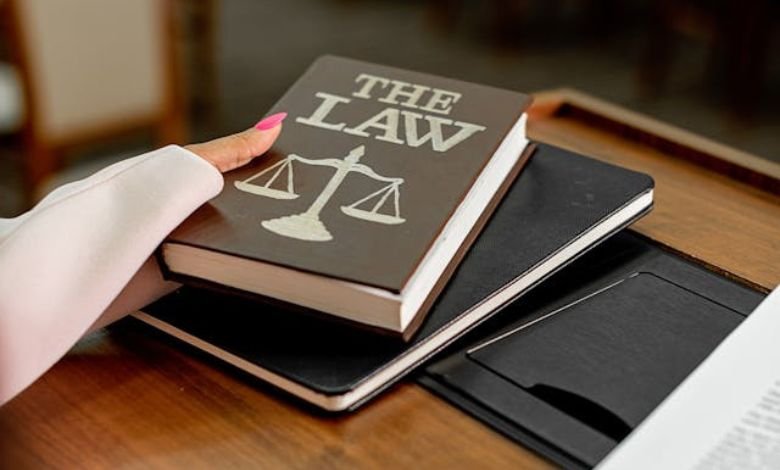
Explore. Criminal Law Book 2: A clear guide to law students covering crimes, Legal concepts, and real- world criminal law.
When I first Encountered Criminal Law Book 2 during my legal studies, I remember feeling both curious and overwhelmed. But on first glance it just seemed like another legal text. This part Of criminal law Where theory faces reality. This is the location. Law ceases to be discussed. Abstract principles And begins to describe. Actually, I’m busy. The real world.
If you are looking for this part of the penal code, chances are you are a law student preparing for an exam. A legal enthusiast tries to understand criminal statutes, or someone researching how criminal offenses are defined. Whatever the reason, staying informed with the latest Legal Updates in this section is an essential step in relation to criminal law overall. Let’s fracture it down in a transparent and practical procedure.
What is Criminal Law Book 2?
Many legal systems are divided into criminal law. Two major sections.
The first section Focusing on general principles, While the second section Focusing on specific crimes. This second section is what most people refer to as Criminal Law Book 2.
For example the structure used in the Revised Penal Code of the Philippines separates criminal law I two books:
- The book 1: General principles of criminal liability
- The book 2: Specific offenses and their penalties
While Book 1 defines terms such as intent, negligence and criminal responsibility, go second The book explains. The actual offenses themselves, including:
- Murder
- Theft
- Fraud
- Bribery
- Treason
In simple terms:
- Book 1 teaches how criminal law works.
- Book 2 explains which actions are considered crimes.
The Historical Origins of This Legal Structure
Interestingly, the two-book structure did not appear by chance. It has deep historical roots.
Many modern penal codes inherited their structure from European legal systems, particularly:
- The Spanish Penal Code of 1870
- The Napoleonic Penal Code
These early codes divided criminal law into two main sections:
- General principles governing criminal responsibility
- A detailed list of crimes and punishments
This structure proved extremely practical. Judges could apply the principles from the first book to the offenses listed in Criminal Law Book 2 to determine whether a particular act was criminal.
Over time, this format spread to many countries influenced by civil law traditions. Even today, Law schools still demonstrate. Criminal law By using this same structure.
Criminal Law Book 1 vs Criminal Law Book 2
To understand the difference between these two sections, create everything more clear.
Analyzing it is like learning to drive a vehicle.
- Book 1 is to appreciate learning. The rules of the road.
- Book 2 is like a study. A list of traffic violations.
Examples of traffic violations May include:
- Superior speed
- Running a red light
- Reckless driving
Here is a simple comparison:
| Feature | Criminal Law Book 1 | Criminal Law Book 2 |
|---|---|---|
| Focus | Legal principles | Specific crimes |
| Topics | Responsibility, intent, penalties | Murder, theft, treason |
| Purpose | Explain theory | Define criminal acts |
| Law school course | Criminal Law I | Criminal Law II |
Without Book 1, we understand how criminal responsibility works. Without the second book, we do not recognize which actions are punishable.
Both are essential.
The Structure of Criminal Law
One of the first things students note on Criminal Law Book 2 is its organization. Grouping is done on the basis of crimes. The type Harm the legal interest. This structure makes it easier to understand the logic behind criminal law.
Crimes Against National Security
These offenses threaten the stability of the state.
Examples Includes:
- Treason
- Espionage
- Rebellion
Governments treat these crimes seriously because they inspire national safety.
Crimes Against Public Order
These offenses disrupt society and public peace.
Examples Includes:
- Sedition
- Illegal assemblies
- Resistance to authorities
Imagine a violent crowd resisting law enforcement. The law intervenes to maintain order.
Crimes Against Persons
This category includes crimes that directly harm individuals.
Examples include:
- Homicide
- Murder
- Physical injuries
- Assault
When most people think about criminal law, this is usually the category they imagine.
Crimes Against Property
These crimes involve unlawful interference with property rights.
Examples include:
- Theft
- Robbery
- Fraud
- Embezzlement
If someone steals your phone or breaks into your home to take valuables, those acts fall under this category.
Crimes Against Honor
Some legal systems also protect personal reputation.
Examples include:
- Libel
- Defamation
- Slander
Words can also become crimes when they unfairly damage someone’s reputation.
The Concept of Protected Legal Interest
One idea that intrigued me while studying this subject was the concept of protected legal interest. Every crime protects something valuable in society.
For example:
| Crime | Protected Interest |
|---|---|
| Murder | Human life |
| Theft | Property |
| Bribery | Government integrity |
| Treason | National security |
When you begin studying criminal law this way, everything starts to make more sense.
Instead of memorizing crimes randomly, you begin to see a pattern. Laws exist to protect something important.
How Law Schools Teach This Subject
Law schools usually divide criminal law into two courses.
The first course focuses on theory. The second focuses on application.
When students begin studying Criminal Law Book 2, the learning style changes dramatically.
Suddenly it is no longer just about reading statutes. Students must memorize the elements of each crime.
For example, proving theft may require showing that a person:
- Took property
- That belonged to another person
- Without consent
- With the intent to gain
Miss even one element, and the crime may not legally exist.
That is why students spend countless hours reviewing statutes and analyzing real court cases.
Why This Part of Criminal Law is Challenging
Many students remember long nights in the library trying to keep track of dozens of crimes and their elements.
The challenge comes from several factors:
The volume: The second part of the penal code often contains hundreds of criminal provisions.
The details: A small difference between two crimes may dramatically change the penalty.
Court interpretation: Judges frequently clarify how laws should apply in real situations.
Studying this area is not only about reading rules. It is about understanding how courts interpret and apply those rules.
Why Students Search for Criminal Law Book 2 Online
Search trends show that many people looking for Criminal Law Book 2 are students.
Common searches include:
- Criminal law summaries
- Reviewer notes
- Exam preparation materials
- PDF copies of statutes
Most students are preparing for:
- Exams
- Law school recitations
- Bar review
They want simple explanations, clear examples, and easy summaries.
In other words, they want the same clarity most of us wished for when we first opened a criminal law textbook.
Quick Study Summary
If you are reviewing for exams, here is a simple way to remember the purpose of Criminal Law Book 2.
It focuses on:
- Specific criminal offenses
- Elements of crimes
- Penalties for unlawful acts
- Legal interests protected by law
- Interpretation through court decisions
To understand this part of criminal law it doesn’t just mean learning the law, but how it applies in real life.
The Key Takings:
- Looking back, I studied this part of criminal law but I felt scared at first.
- Long lists of crimes, technical definitions, and the intricate details seemed overwhelming.
- But over time something interesting happened.
- Instead of looking at it as a confusing collection of rules, I started watching it.
- A map of society’ s values. Every crime reveals something.
The law Trying to protect:
- Life
- Property
- Public order
- Government integrity
- Personal dignity
To understand Criminal Law Book 2 It’s not just about passing the exam. It is about understanding how society defines suitable and incorrect, and how legal systems when to solve those boundaries cross.
Additional Resources:
- Criminal Law: Examples and explanations, 5th Edition: A student- friendly guide with examples and practice Questions To clarify criminal law concepts Absolutely.
- Criminal Law (Second Edition) – SAGE Publishing: Comprehensive textbook combination legal principles with real- world case material and analysis.